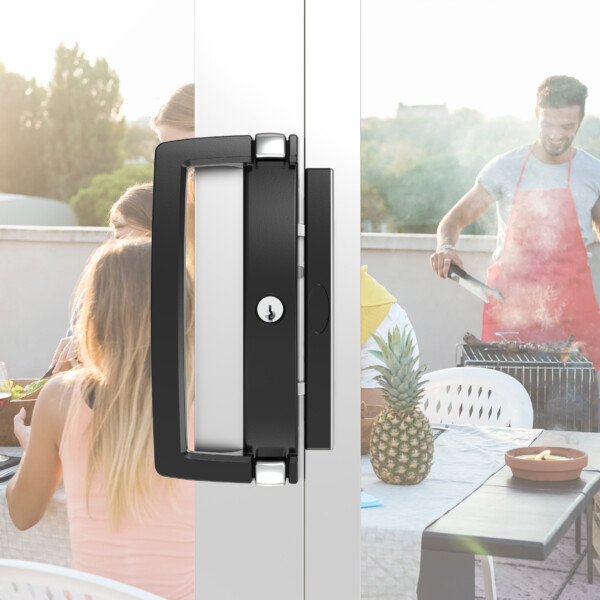
Dual engagement locking transforms door performance. A twin point locking system engages at the top and bottom simultaneously, distributing load across the full frame height. The result is measurable: enhanced...
Read More ⌵Twiin Point Locking
DS3050 | Essence
Price range: $201.59 through $216.19 inc. GST — DS3050
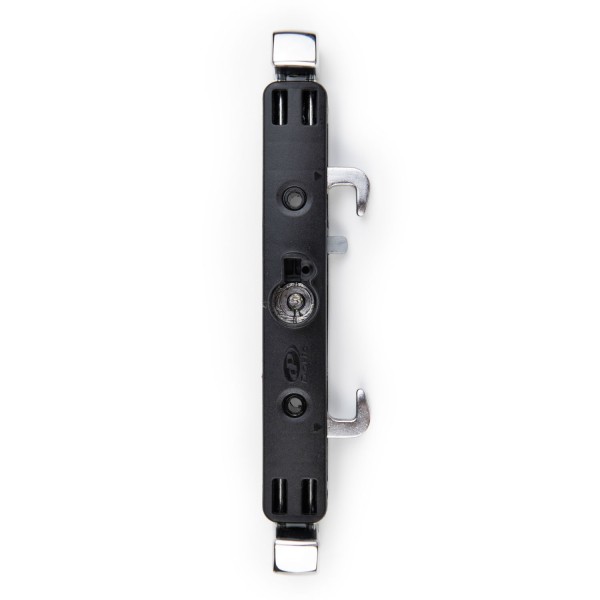
Twiin | Sliding Door Lock Chassis
$64.59 inc. GST
DS3230 Timbarra | Stainless Steel Twiin Sliding Patio Door Lock
DS3230
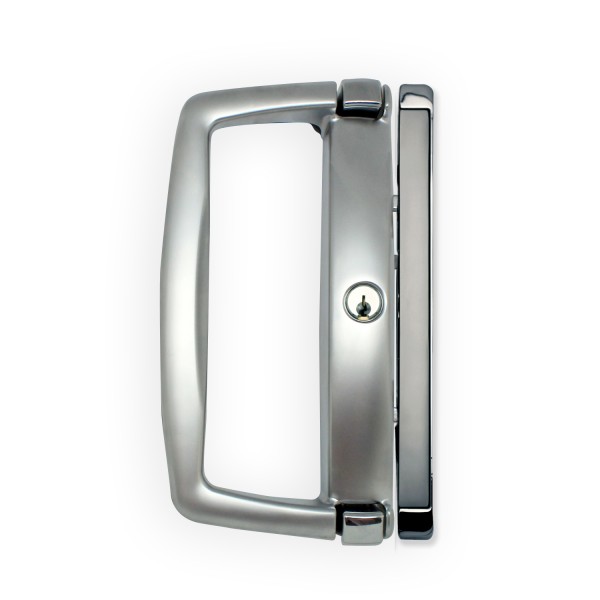
DS3130 Timbarra | Twiin Sliding Patio Door Lock
Price range: $244.39 through $349.13 inc. GST — DS3130, DS3230SS
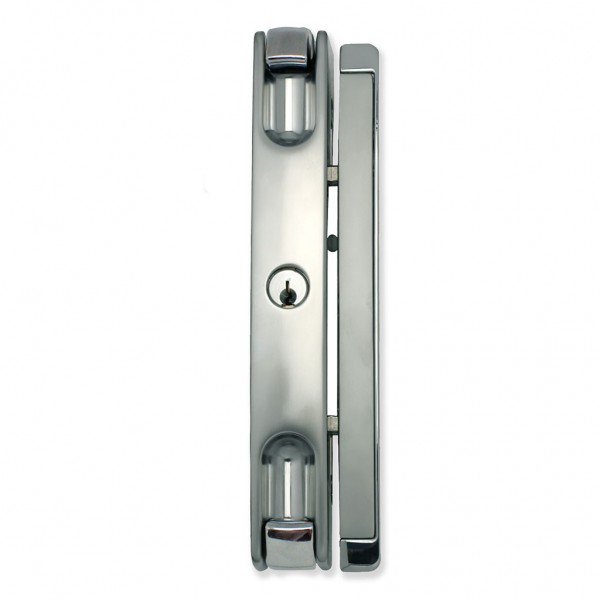
DS3010 Carey | Twiin Sliding Patio Door Lock
$257.32 inc. GST — DS3010
DS3110 Carey | Twiin Sliding Patio Door Lock
Price range: $230.02 through $244.39 inc. GST — DS3110Dual engagement locking transforms door performance. A twin point locking system engages at the top and bottom simultaneously, distributing load across the full frame height. The result is measurable: enhanced door stability, improved forced entry resistance, and reduced wear on hinges and latches.
This is mid-level security engineered for doors where single-point locking is inadequate—tall entry doors, wide sliding panels, and high-traffic commercial openings. The mechanism is clean. The installation is straightforward. Doric engineers these systems specifically for Australian conditions, with configurations purpose-built for both hinged and sliding applications.
Why a Twin Point Lock Mechanism Outperforms Single-Point
A single-point lock holds the door at one location. The latch engages the strike, and the rest of the door relies on the hinge alignment and its own rigidity. On a standard-sized door, this works. On a door exceeding 2100 mm in height or 900 mm in width, it does not.
The top of the door bows outward under force. The bottom shifts. The seal breaks, and the lock becomes the weakest point.
A twin point door lock eliminates this failure mode. Two locking points—one near the top, one near the bottom—engage simultaneously. The door is held at both ends. Load is distributed across the frame rather than concentrated at the handle. This is not a feature upgrade. It is a structural correction.
When a Twin Point Security Lock Is Required
Not every door needs twin point locking. The decision is governed by door dimensions, usage frequency, and security requirements.
Twin point locking is specified when:
- Locking for tall doors is required – Door height exceeds 2100 mm
- Door width exceeds 900 mm
- The opening is subject to high traffic or forced entry risk
- The door is a sliding configuration requiring positive engagement at both ends
- Frame construction is robust enough to receive top and bottom strikes
Twin point locking is not required for:
- Lightweight internal doors
- Standard residential passage doors under 2100 mm
- Doors with inadequate frame depth or material
This is a precision specification. If the door does not demand dual engagement locking, a single-point lock remains the correct choice.
Dual Latch Locking System: How It Works
A twin point lock mechanism operates through a central gearbox. When the handle is actuated, drive rods extend vertically—upward into the head of the frame, downward into the sill or threshold. Both locking points engage simultaneously. Retraction is equally simultaneous.
This differs from multi point locking, which may incorporate three, five, or seven locking points along the stile. Twin point is the alternative to multi point locking when full perimeter engagement is unnecessary but single-point is inadequate. It is the middle ground, and for many commercial and residential applications, it is the correct ground.
Top and bottom locking points provide:
- Even compression of the door seal
- Elimination of bowing under wind load or physical force
- Reduced wear on the primary latch and hinges
- Measurably improved forced entry resistance
Twin Point Sliding Door Lock Applications
Sliding doors present a unique challenge. The door moves horizontally. Traditional multi point systems are often impractical. A twin point sliding door lock solves this by engaging a locking point at the leading edge and a secondary point at the trailing edge or overhead rail.
The DS3130 Timbarra, DS3010 Carey, and DS3050 Essence are purpose-engineered for this condition. Each provides dual engagement locking specifically for sliding configurations. These are not adapted hinged-door locks. They are sliding-door-native systems.
Pairing logic:
- Sliding doors require appropriately rated door rollers to carry the door weight smoothly
- Sliding door locks must be matched to the door thickness and profile
- Hinged twin point systems require hinges rated for continuous use and door mass
Do not specify a twin point lock without verifying the supporting hardware. The system is only as strong as its weakest component.
Commercial vs Residential Application
Commercial-grade locking systems are specified for durability, cycle life, and resistance to tampering. Twin point security locks used in retail, aged care, education, and high-traffic multifamily housing must withstand thousands of operations per year. The mechanism must be housed in corrosion-resistant materials, and the drive rods must be captured to prevent deflection.
Residential twin point systems are specified for tall entry doors, oversized sliding panels, and doors exposed to wind. The performance requirement is lower than commercial, but the stability requirement remains identical. A 2400 mm residential door will bow exactly as much as a commercial door without top and bottom engagement.
Doric supplies both. The difference is communicated in materials, finish options, and cycle testing. The system logic is identical.
What Twin Point Locking Is Not
Clarity in specification prevents misorder and misapplication.
Twin point locking is not:
- A smart lock or electronic access control
- A replacement for poor door construction or undersized framing
- A multi point locking system
- Required for all doors
This is a mid-level door security system. It sits between single-point convenience and multi-point perimeter engagement. It is selected deliberately, not by default.
System Compatibility and Specification Support
Every twin point lock mechanism requires:
- Correct door preparation (edge bore, backset, and rod passage clearance)
- Matching strikes installed plumb and square
- Appropriate hinge specification to maintain alignment
- Rollers rated for the door weight in sliding configurations
For sliding doors, the DS3130 Timbarra, DS3010 Carey, and DS3050 Essence represent the current standard for twin point sliding door lock applications. Each is engineered for dual latch locking system performance with sliding-specific geometry.
For hinged doors, consult the door locks category for twin point options compatible with standard and deep-section doors.
Why Specifiers Choose Doric
Doric has supplied locking systems to Australian fabricators, builders, and commercial specifiers for over 75 years. Twin point locking is not a new category for us. We have engineered these systems continuously, refined the drive rod geometry, and matched them to the door constructions that require them.
We do not oversell. We do not recommend twin point where single-point suffices. We do not substitute multi point where twin point is correct. This is engineering triage. It is our responsibility to state clearly when a system is required, when it is optional, and when it is unnecessary.
Frequently Asked Questions
Can a twin point locking system be fitted to an existing door?
Yes, if door and frame depth allow for drive rod channels. Retrofit requires edge routing and strike recesses. Site assessment recommended.
What is the difference between twin point and two-point locking?
Often used interchangeably. Twin point means integrated simultaneous engagement via single gearbox. Two-point can sometimes refer to separate mechanisms.
Are twin point locks compatible with standard Australian door furniture?
Yes. Accept standard handle fittings, spindle sizes, and common backset configurations. Confirm door thickness and backset before specifying.
How does twin point locking perform in bushfire or BAL-rated zones?
Available with BAL-compatible components. DS3050 Essence and selected Timbarra variants suit bushfire-prone areas. Consult Doric for specific ratings.
What maintenance does a twin point lock mechanism require?
Minimal. Annual lubrication with dry graphite or silicone. Check strike alignment yearly. Maintain door rollers for sliding configurations.
Shop Twin Point Security Locks with Doric
Secure tall entry doors and wide sliding panels with Doric’s twin point locking range. Dual engagement. Commercial-grade durability. Australian-made.
- Shop DS3130 Timbarra – twin point sliding patio door lock
- Shop DS3010 Carey – twin point sliding door lock
- Shop DS3050 Essence – twin point locking for sliding doors
- Call 1300 132 389 for project-specific specification advice
With Doric, your locking system is engineered to perform where it matters most.